Spina Bifida
Spina bifida is a disorder that occurs while a fetus is still developing. This condition occurs when the spine and the spinal cord are unable to properly grow. Spina bifida also involves the neural tube, which over time develops to create the spinal cord, brain, and the tissue that secures the brain and spinal cord (Mayo Clinic, 2018). Usually the neural tube is created over time, but in individuals with spina bifida, the neural tube is unable to properly form (Mayo Clinic, 2018). This is a disorder that can cause either intellectual or physical disabilities, and the severity of the condition can range (CDC, 2018).
There are three different types of spina bifida. There is spina bifida occulta, spina bifida myelomeningocele, and spina bifida meningocele (Mayo Clinic, 2018). The three forms of spina bifida take different forms and affect individuals differently. Spina bifida occulta is the least severe form of spina bifida, while spina bifida myelomeningocele is the most extreme form of spina bifida (Mayo Clinic, 2018).
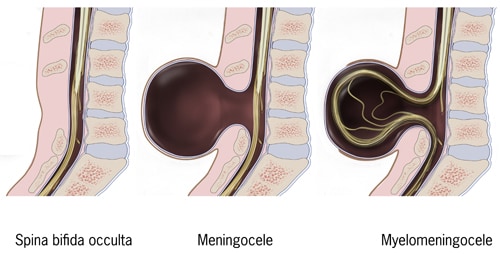
The next most extreme version of spina bifida is spina bifida meningocele. It is characterized by a sack of fluid on the back of the baby, but the sack of fluid does not contain the spinal cord. Because the spinal cord is not in the sack of fluid, spina bifida meningocele only causes minimal disabilities (CDC, 2018). Spina bifida meningocele has a number of things in common with spina bifida myelomeningocele, but is not as extreme.
Spina bifida can cause a range of disabilities, depending on the severity of the case. Spina bifida myelomeningocele is the most severe form of the condition. It is similar to spina bifida meningocele in that there is a sack of fluid that sits on the outside of the baby’s back (CDC, 2018). This type causes severe disabilities and can put the baby at higher risk for disease and infection (Mayo Clinic, 2018).
The cause of these types of spina bifida are unknown currently, but there are certain factors that doctors say can contribute to spina bifida. One factor that can affect having a baby with spina bifida is diabetes. The Mayo Clinic listed diabetes as a risk factor because women who are unable to regulate their blood sugar increase their risk of having a baby with spina bifida (Mayo Clinic, 2018). The CDC also warns women with diabetes about their risk of having a baby with spina bifida, as well as women who are obese before they become pregnant. These are two contributing factors that can affect if a woman is at a higher risk of having a baby with spina bifida (CDC, 2018).
Approximately 2,000 babies are born with spina bifida every year (NINDS, 2018). There are a range of symptoms and disabilities that can be associated with spina bifida. The three different types of spina bifida can manifest differently in various individuals. Spina bifida affects people all over the world and every day.
Sources
What is Spina Bifida | CDC. (n.d.). Retrieved from https://www.cdc.gov/ncbddd/spinabifida/facts.html
Spina Bifida Fact Sheet. (n.d.). Retrieved from https://www.ninds.nih.gov/Disorders/Patient-Caregiver-Education/Fact-Sheets/Spina-Bifida-Fact-Sheet
Spina bifida. (2018, March 09). Retrieved from https://www.mayoclinic.org/diseases-conditions/spina-bifida/symptoms-causes/syc-20377860
Comments
Post a Comment